
Platelet Rich Plasma FAQs
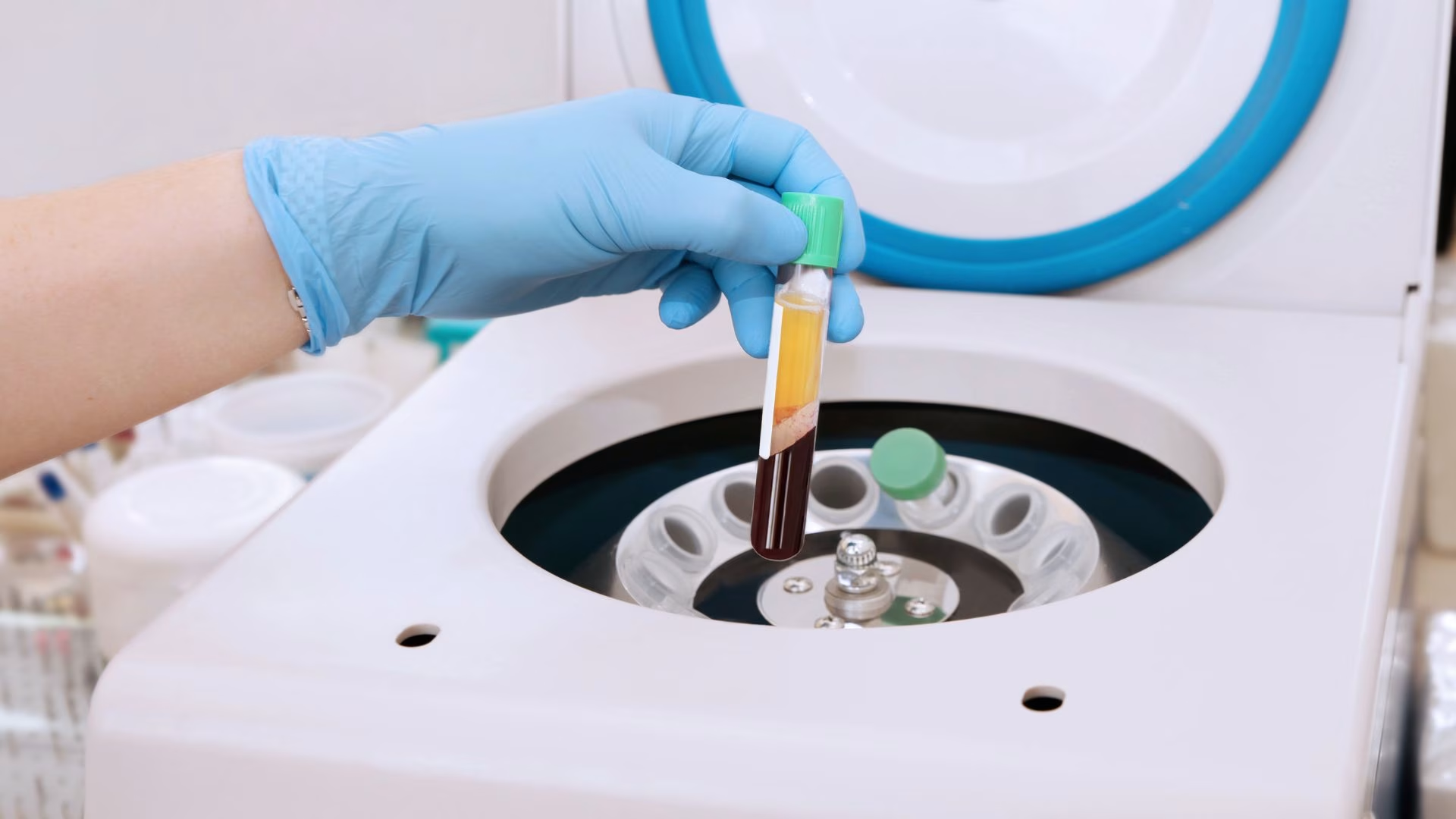
Platelet rich plasma injections have been used in mainstream orthopaedic and musculoskeletal practice for several years now. The treatment involves taking blood from a patient…
I believe in choice and guidance Very often a patient enters my clinic having already done extensive research on what type of injection therapy they would like. The vast Majority of patients have also engaged in active rehab, addressed their Weight and are living as healthy a lifestyle as possible but continue to have a poor quality of life, simply living with it is not a option for them. With my decade-long experience, there are pros and cons to most choices, like anything in life. However, the options I do offer I believe in and have researched from my perspective.
I can’t say 100% what is going to work best for you, there is no data or clinician can give you a guarantee, but I believe discussing the choices with the patient and coming to an agreement for the best treatment is the way forward. I also offer my anecdotal experience of the type of injection and my experience of its likely outcome with the pathology at hand.

Hyaluronic Acid
Hyaluronic Acid is an incredibly useful substance in combating stiff and painful joints… So what is ‘HA’. Forgetting about the joint injection products, lets look at the function of our own HA, produced by our own bodies first. Pronounced ‘hi-ah-lew-ron-ic’, it is a gooey, slippery substance that your body produces naturally. Scientists have found hyaluronic acid throughout the body, especially in eyes, joints and skin.
Hyaluronic acid is a remarkable substance because of all the benefits and uses it has in your body. Here is a few of the benefits of hyaluronic acid:
It helps things move smoothly. This includes our own joints. It prevents pain and injury from bones grinding against each other and nourishes the synovial fluid promoting healthy cartilage.
It helps keep things hydrated. Hyaluronic acid is very good at retaining water. A quarter-teaspoon of hyaluronic acid holds about one and a half gallons of water. That’s why hyaluronic acid is often used for treating dry eyes of skin treatments. This also helps within joints, as a cushioning effect is created when combined with fluid in the joint.
It makes your skin flexible. Hyaluronic acid helps skin stretch and flex and reduces skin wrinkles and lines. Hyaluronic acid is also proven to help wounds heal faster and can reduce scarring.
How can ‘HA’ help an Arthritic Joint?
Young Cartilage; Proteins, collagens and chondrocytes that produce cartilage and provide compressive stiffness, elasticity, and lubrication with a smooth gliding surface.
Old Cartilage; The normal ageing process means a naturally reduced cartilage thickness due to reduced chondrocytes (cells that make cartilage). The surface is still healthy and smooth.
Osteoarthritic Cartilage – Inflammation in the joint means the loss of natural biomechanics the destruction of the proteins and chondrocytes that repair and regenerate younger, and the breakdown of healthy cartilage. This results in a rougher, higher friction surface.
In a healthy joint, Natural native Hyaluronic acid in synovial fluid is important to maintains healthy cartilage.
Healthy synovial fluid contains a high concentration of high molecular weight HA, which is produced by synoviocytes.
This molecular weight is different to the weight required in injection therapies. To help slow down this painful process, we must offer therapies that help the body gain back it’s natural healthy functions, which are under attack in OA.
It’s key to appreciate, osteoarthritis is more than wear and tear! Although part of the problem, there is strong negative biology at play in the OA joint.
Prominent inflammatory & biochemical abnormalities exist in the arthritic knee. These need to be considered by your clinician for an effective treatment option. Biochemical and biomechanical options work well in tandem.
There is still a mechanical issue in OA which can also be addressed by a HA injection therapy. The mechanical benefits are:
All the above lead to an increased range of motion in the joint, reduced pain and the ability to increase activity levels, which leads to increased health of the joint.
There is also a longer-term biological effect with HA beyond helping the wear and tear element of OA. The therapeutic HA injection needs to be in the right zone. Cingal and Monovisc are two products developed to ensure this longer-term benefit, the HA molecules bind strongly areas of the joint that then stimulate the body’s own HA biosynthesis, meaning the joint sarts to produce its own HA again.
HA impacts the inflammatory cascade occurring and reoccurring in knee OA.
So which injection is best for me?
Not all injection therapies have the same mode of action as HA as described above. Even some HA products work in different ways with lower concentrations or high molecular weights. At The Arthritis Clinic, we offer choices with expert guidance and discussion.
We work with the leading products:
Ostenil, Durolane, & Monovisc as well as Cingal, which is a combination treatment, uniquely containing a safe steroid. We also offer Arthrosamid and Sinogel injections in addition to regular steroid injections.
We also have treatments like PRP or Arthrosomid which again, offer a different approach to managing your joint pain. The important thing at The Arthritis Clinic is that we discuss the options and agree on a plan that works best for you.
For more information, you can visit the MSK injection page, or please get in touch to discuss the options further.